


Narrative Theories
- Angelina Ding
- Sep 23, 2022
- 13 min read
Updated: Oct 15, 2022
Marshall McLuhan—Medium
Steve Neale—Genre
Rolland Barthes—Semiotics
Claude Lévi-Strauss—Binary Opposition
Tzvetan Todorov—Narratology
Vladimir Propp—The Three Act Ideal
Jean Baudrillard—Postmodernism
Stuart Hall—Representation
Marshall McLuhan
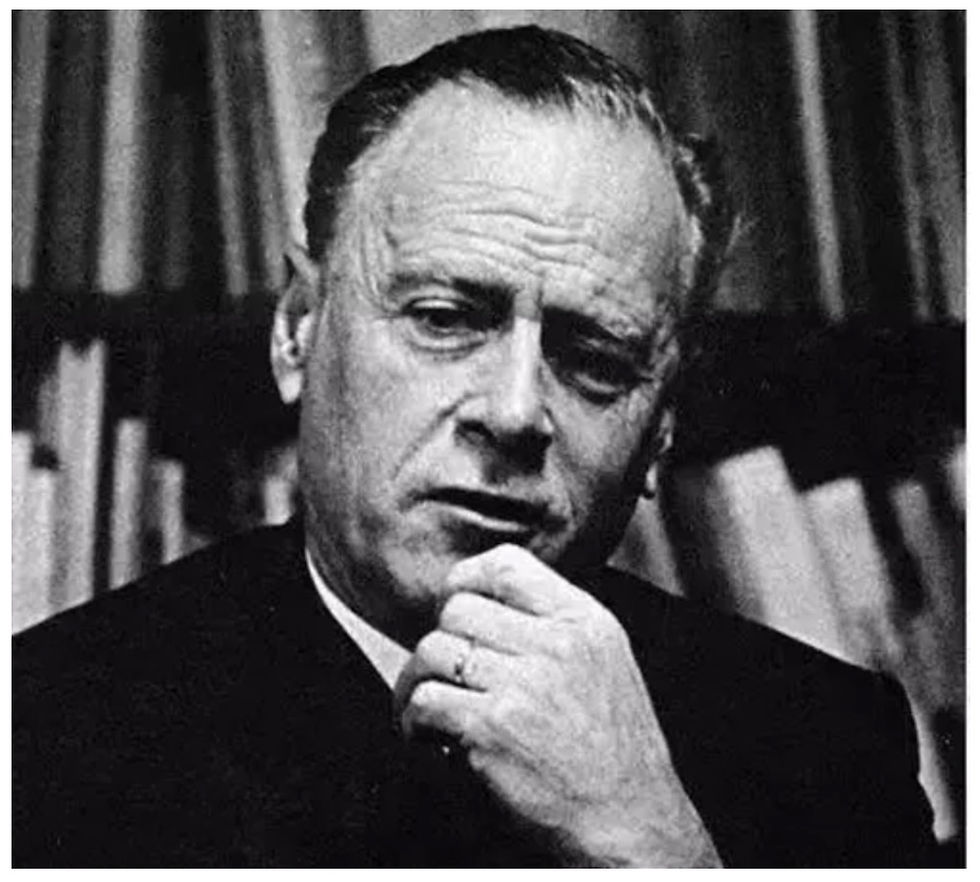
“Medium is the message”
During McLuhan’s time, medium is not referring to the content itself, it is referring to the forms and methods used to communicate information. McLuhan believes that medium has a significant impact on the people and society.
There are many forms of medium, examples include word of mouth, printed media, electronic media, internet media, and interactive media.
Word of mouth is when information is exchanged by conversation. This method is very inefficient and may cause people to be misinformed. Usually the communities using this method are primitive and doesn’t require complex exchange of information.
Printed media allows people to be informed by books, newspapers, magazines, etc. This transformed the world greatly because it greatly expands information and knowledge.
Electronic media like radios and televisions could ensure that information is transformed in real time. However the amount of information we could access to is controlled, so people may receive very unified cultures and shared experiences.
Internet media creates point to point communication for people and it creates freedom for people to write their opinions and thoughts and post them online. Everything could theoretically be transferred to everyone around the world. This results in fragmentation of unified culture and shared experiences.
Interactive media like games are highly engaging and it creates a world our real life could not compete with, many people could emerge into virtual world by this medium.
Steve Neale

Steve Neale believes that all genres contain repetitions and differences in them. A film’s genre is assessed based on how much it conforms to a certain genre’s conventions and stereotypes. The film itself would be assessed on how much it subverts the genre’s conventions and stereotypes to consider how unique and innovative it is.
A film genre is based on similarities in either the emotional response to the film or the narrative elements. The emotional response often refers to comic, tragic, etc., while narrative elements are things like character, story, plot, and setting. There are two main genres of film, one is fiction and one is non-fiction. A lot of sub-genres then have emerged from them. A good way of judging a film’s genre is looking at its level of verisimilitude. If the film has a high level of verisimilitude, it would be under genres like documentary, news-based products, biopics and historical drama. In contrary, if the film has a low level of verisimilitude, it would be more likely categorized under fiction, fantasy, etc.
Neale states that Hollywood’s generic regime performs two functions:
1. To guarantee pleasure and meaning for the audience
It is proved that audiences find pleasure from recognizing familiar elements and the way those elements are linked in an unfamiliar way or the way that unfamiliar elements might be introduced. Genre is constituted by specific systems of expectations and hypothesis which spectators bring with them to the cinema and which interact with the films themselves during the course of the viewing process.
2. To offset financial risks of film production by providing collateral against innovation and difference
To the film’s production team (producer, director etc) genre provides a template. To the film’s distributors genre provides assumptions about which audiences they should be marketing to.
Using two adventure movies of the same genre as example:
Tomb Raider 2 and Candle in the Tomb
Tomb Raider summary:
“Lara Croft (Alicia Vikander), the fiercely independent daughter of a missing adventurer, must push herself beyond her limits when she discovers the island where her father, Lord Richard Croft (Dominic West) disappeared.”—IMDb
Candle in the Tomb summary:
“Can a woman trust tomb raiders to help her find her missing father? Shirley Yang (Joe Chen) is an archaeologist who grew up in the United States. When she learns that her father has disappeared while exploring tombs, she returns to China to try to find her missing father. She meets Hu Bayi (Dong Jin), a tomb raider who learned the art of Feng Shui from an antique book that he inherited from his family and now has specialized knowledge of tomb configuration.”—IMDb
Similarities:
-They both had a main women character, which breaks the gender stereotype that women would be afraid of dangerous places like tomb.
-dark lighting in tombs, cannot see the surroundings
-creepy props
-very limited survival resources
-death/ghost comes alive
-father passed away and left something for them to explore, lead to a mission
-hard journey to get to the place
-often have accidents which breaks the original plan
-young brave, bright and kind characters verses bad characters against them for the treasure
Differences:
Candle in the Tomb is a Chinese tomb which has Chinese elements added in. For example, characters in this film believes in fengshui. It is something that helps people identify the location of the tomb. They also have these traditional Chinese tools to see if they are allowed inside the tomb. There are also Chinese legends and wall paintings giving directions. A typical thing that the tomb raiders do is light a candle and if it turns green, they are not allowed to touch the coffin.
Tomb raider has this competition between the main character and antagonists who are also after the treasure. This makes the task of finding the treasure more complicated for the main character because once she needs to keep it safe from others.
From this, we can see that elements used in storyline to mise-en-scene to sound, etc., makes the film unique from another one in the same genre.
However, this “difference/subversion” in the genre theory does not apply when a new version of an old movie is created because it tries to restore and copy all the details in the old version. Also, people like Stuart Hall may challenge the theory by saying that the films may effect the audience’s original ideologies by the representations, e.g. characters, of the genre they lay in. This can sometimes be dangerous and cause potential danger.
Rolland Barthes
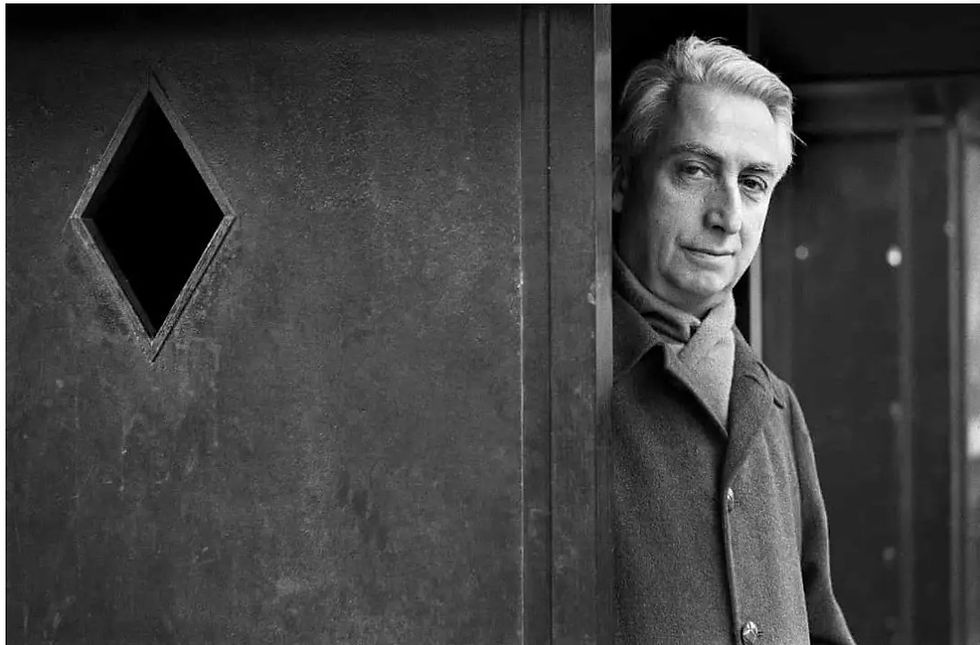
Barthes denotation and connotation model refers to audience decoding the media when they recognize a content and then thinking about the effects these certain features create. However, this model is less effective when people have to consider the way in which elements combine to produce singular effects. Therefore, he enhanced and created a more advanced version of it, which is the semiotics.
Hermeneutic (enigma): any mysterious part of a media that is unclear, hooks the audience in
Proairetic (action): moments in which meaning is conveyed through action or demonstration (sometimes resolve the enigma created before)
Semantic codes (connotative elements): elements that we could recognize with special hidden meanings
Symbolic codes: use of symbols to create meaning and ideas
Cultural codes: refers to an external body of knowledge such as scientific, historical, and cultural knowledge the audience have
All films apply the five codes and many of them are mixed together in the same scene. The movie Soul’s opening clearly help demonstrate Barthes theory. It is a movie about a person called Joe Gardner and he is a middle school music teacher who has a lot of passion in Jazz. In an accident, he went on a journey to a world somewhere between life and death. This experience helped him understand what it means to have soul in life.
Cultural: The main character and his family has a black skin color and speaks English with an African-American accent. This is symbolizing their race. Jazz music originated from deep South America by the African-American community so usually, characters with African-American traits are very good and passionate in jazz music. There is a history of how jazz originated in the 19th century and the main reason is because of the unfairness people felt with slavery.
Action: There is this student in Joe’s class that played her part of the music in the orchestra with out control. This shows that she really loves music and that she has talent to improvise her own music.
Symbolic: The display boards and room numbers shown that the setting is in a middle school. Then there were a lot of black and white pictures and it represents people that are dead.
Semantic: the facial expression of Joe could tell the audience what he likes and what he doesn’t like. When the teacher announces that he got a full time job in school, he did not smile and take the envelope as if he is excited while he said great. However when his student told him that there is a chance for him to work with a famous Jazz singer, he gave a massive smile and rushed out of the door to the performance location. Usually, the facial expressions and actions of animated characters are exaggerated.
Enigma: When Joe’s mother asked him wether he will accepted the music teacher job at middle school, he told his mother that he had his own plans for his life. This makes the audience wonder what his plan is.
Claude Lévi-Strauss in contrary, thinks that the media as a whole is more important than the fragments that it is made up with. He also believes that the media products has universally shared structures while Barthes think that media products are from temporal and social influence.
Claude Lévi-Strauss

Levi Strauss, a French anthropologist in the 1900s, proposed a theory of 'binary opposites' which suggests that in the majority of narratives in media, there is contrast between two mutually exclusive concepts or things that creates conflict.These binary opposites help to thicken the plot, further develop the narrative, and introduce contrast. Strauss believed these oppositions are fundamental to our ability to make meaning in our lives. For example, we understand good when it opposed to evil.
Marvel typically likes to use binary opposites in construction their characters. There is usually a protagonist and an antagonist. These two character play an important role in leading the storyline. Using ‘Captain American’ as an example. The protagonist is Captain American and the Antagonist is the Red Skull. A color opposition is used to represent the characters, Captain American wears blue while the Red Skull wears mainly red. Captain American is alive and have features of human while the Red Skull is a skull which is implying death. Their weapons also show opposition as one is round which symbolizes peace and the other is cubic which symbolizes conflict. The belief they have also shows conflict. Captain American represents democracy and freedom of America while the Red Skull represents Nazi which is totalitarian and fascist. From these few opposing examples, we can see that there are many binary opposites in a character and many more in the entire movie. So it could be concluded that nowadays, binary opposites are rather complex.
A problem with binary opposites is that they may oftentime perpetuate negative stereotypes. For example, if the binary opposite was man verses woman, according to gender stereotypes, the man may be portrayed as strong whereas the woman is weak and dependent on the man. It is important to see how these stereotyes have changed in media forms over time.
Tzvetan Todorov

Todorov believes that all movies share a similar pattern in their narrative structures. Unlike Strauss, he believes that stories are not constructed through any individual effect or single moment within a product, e.g. two opposing characters;It is constructed through narrative sequence and transitions throughout the whole narrative,. Moreover, these sequence and transitions create a link to real world behaviors of the audience when they recognize them. The narrative all follows the pattern:
Equilibrium
Disruption
Recognition
Repair
New Equilibrium
Then he believes that the effects of the narrative structure is to construct ideals for the audience through the use of equilibrium and disequilibrium. While this sequence help point of very problematic ideas, values, and behaviors in the current society, the transformation produces the positive models for the audience.
The bad traits are usually embodied in the villain character.
The power of stories lies in their deeper symbolic meanings.
A recent movie on Changjin pond demonstrates this narrative structure well.
1. The opening scene is a very beautiful scenery of rivers and mountains, shown when the soldier is traveling back to his village by boat. The soldier goes home and says to his family that the war is ending and he’s going to build a new home for his parents. It was clear that he was going to rest for at least a few days before he returns back to his army.
2. Then it disrupted by the Americans attacking the boarders of China which means he has to go back to war again before he could live peacefully in his homeland
3. He is recognized as the head of his group of soldiers. These soldiers fighting for China during that time is well known for their patriotism, and how they could bear suffering and hardships in the battles. This is strengthened through the comparison of soldiers from the US. They had hot, festive meals like roast turkey and mashed potatoes while Chinese soldiers only had rough, uncooked crops. They had thick coats, advanced shelter and military while Chinese soldiers only had thin layers of soldier uniform, basic gun weapons, and had to rest in the harsh weather. (The weather was 20 degrees below zero and many soldiers were frozen to death before they even battled)
4. It is repaired with blood of thousands of soldiers. Many gave up their lives to give their comrades advantage against the enemy. They gradually gave this almost impossible mission of winning the battle a bigger possibility. After the long and hard journey, they won the battle.
5. This war they fought have created this equilibrium for their descendants. “If we don’t fight this war, our descendants will fight it.”
Steve Neale‘s theory opposes Todorov’s theory because he thinks that the story structure changes throughout the media so there are no standardized structures for a story.
Vladimir Propp

Propp analyzed hundreds of Russian folktales and came up with the conclusion that folk tales drew from a highly stable list of characters. The characters do not necessarily all have to exist in the same story.
Hero | The central protagonist of the narrative who drives it forward |
Villain | Seeks riches, glory, and/or power, and seeks to stop the hero succeeding in the quest or mission |
Helper | Accompanies the hero for some or most of the quest and can sometimes help |
Donor | Gives the hero important information or equipment to help him/her in the quest |
Blocker | Tries to prevent the hero completing at least part of the quest |
Prize | Acts as a reward for the hero succeeding in the quest |
Dispatcher | Sends hero on his/her quest |
The story is usually a combination of 31 narratemes (closely defined plot moments).
There are four main movements in the fairy stories.
1. The initial situation, the preparatory section of the story where the characters and plot is introduced
2. The complication, the hero is given a quest
3. Search for solution , this is usually where difficulties and repetitions happen, the donor and helper comes in to support
4. Result, the hero succeeds and returns (This stage happens in most of the stories but not all)
Shrek is a good example of a movie with all these characters
The hero: Shrek——goes on the quest of saving the princess
The villain: Dragon——prevents Shrek from saving the princess
The helper: Donkey——accompanies Shrek the whole time
Mentor: Shrek helps himself out in, not actual mentor
Blocker: Cat—sent to stop Shrek from completing the task
Prize: Princess——love & beauty
Dispatcher: King——needs to marry a princess to become a true king and sends Shrek on the quest of saving the princess
Sleeping Beauty is another good example with these characters
The hero: Prince——saves the princess with a kiss
The villain: Evil Witch——castes a spell on the princes
The helper: Horse——accompanies the prince in fighting the evil witch
Mentor: Three fairy godmothers——takes the prince to savethe princess
Blocker: Witch’s pet (a raven)——keeps on breaking the plans of the godmother and the prince
Prize: Princess——love & beauty
Dispatcher: Prince himself loves the princess and wants to go on the quest in saving her
From the two examples, it is clear that not every successful folktale story has all the characters.
Jean Baudrillard

Baudrillard believes that the society has been through three stages of cultural revolution.
Phase 1: Early modernity
This phase is from the Renaissance to the Industrial Revolution. Baudrillard believes that the products representing culture in this period gives people a genuine and realistic feeling, in his words, ‘a profound reality’. All cultures seem to be dominated by religion and there’s only one belief of what the world should be like.
Phase 2: Modernity
This phase is from the Industrial Revolution to the Second World War. The mass culture starts to break up into different versions of reality which helped creat media forms such as cinema, radio, and photography.
Phase 3: Postmodernity
This phase is the current society. Mass media forms dominate over culture, replacing the single ideology with multi and contemporary mass media. The keyword in this stage is ‘hyperreality’, which means the cultural products are no longer based on the unified belief and religion, they exceed and go beyond. This hints that during the postmodern era, the cultural products are fragmented no longer truthful.
Effects of Postmodernity
-media is everywhere
-invades private space
-authenticity is impossible to find and keep
-repetition and duplication effects
Stuart Hall

Concept 1:media representation process
-Record and reproduce real world without distortion
-More than imitation(maintain subjective viewpoint)
-Creates shared symbolic language+understanding by audience’s internalized experience/exposure
Concept 2: Media’s power and stereotypes
-Meaning influence and shape audience’s thinking
-Help construct, reshape, and repurpose stereotypes
-Create more profound and complex effect on social attitudes
The effect of stereotypes:
-Associate specific groups with specific traits
-Increase the visibility of key groups -Infer that negative traits are fixed, natural qualities
-Fixes the boundaries of social acceptance/exclusion
-Stereotyped groups struggle to fight the representations that are constructed on them by superiors
Transcoding stereotypes:
-Cultural representations are not fixed by its repeatedly reaffirming and reseeding process
-Meanings could transform and subvert
-Change pre-existing stereotypes include repurposing the original, combating, and adding contextual information
ANALYSIS OF DUNE
The movie Dune has applied most of the theories mentioned above. This includes Todorov’s narrative structure theory, Strauss’s binary opposition theory, Barthes’ semiotics theory, Neale’s repetition and subversion theory, and Baudrillard’s postmodernity theory.
Narrative Structure:
Equilibrium: The Atreides Family lives on their planet peacefully
Disruption: They went to help control the planet Arrakis and its spice production. This lead to the betrayal by their doctor and the massacre of the family
Recognition: The main character Paul releases from his special talent that he is the one who is going to change what’s happening now, he’s the chosen one
Repair: Paul and his mother travels in the desert and finds a group of Fremens to ally with, the girl that Paul see in his dreams is also there
New Equilibrium: Paul and his mother joins the Fremens to where they live
Some Binary Opposition of Dune include:
-Paul Atreides and the Atreides Family (the protagonist that tries to ally with the Fremens) VS Vladimir Harkonne House Harkonne (the antagonist that tries to have control over the Fremens, spice, and territory)
-the costume worn by the Fremens is a warm and saturated tone VS the costume won’t by the intruders have this metallic and alien tone
-Peacefulness VS Chaotic
Semiotic examples:
Hermeneutic: the box that Paul had his hand in is a prop that does not give the audience an explanation of why it created such pain on him
Proairetic: when people press the buttons on their arm, it means that they have opened a protection layer over them
Semantic: the voice used by Paul is something unusual and when he uses it, the audience knows that it would control someone’s mind
Symbolic: the moving of sand is when a sand worm is going to come out
Cultural: the Fremens have blue eyes
Postmodernity + Repetition & Subversions
The movie Dune, as a science-fiction movie, is shot with real people in real locations. Like other science fiction movies, it has these special effects added to make it “hyperreal”. E.g. spaceships, sandworms, explosions, etc. This means what we see in the movie is based on our lives but it has aspects that are unrealistic. This fits Jean Baudrillard’s theory of postmodernity because what is in the movie is no longer based on what humans actually see and believe. However, unlike other science fiction movies, Dune includes details that subverts the ‘total futuristic’ idea. For example, the weapons used are made from accesible materials on earth, the setting is not in space or other dimensions, etc. This is subverting the trend of science-fiction movies produced nowadays.
The structure of the movie is presenting things in chronological order. However, it does have short pieces of flashbacks and dreaming in the main character‘s point of view. The opening started with a line “dreams are messages from the deep” before the studio logo of Legendary and Warner bros came out. Then a J-cut narrative starts before shots are seen. An establishing time-eclipsed shot of the desert is shown at the beginning. Then action shots of big machinery working is shown. Afterwards, the closeups of Fremen characters is seen. Shots switch from this very yellowish tone to a very cold tone where the Harkonnes enter and then an action shot of fight and chaos is shown. Lastly there’s an establishing shot showing that the Harkonnes are gone from Arrakis before the film title enters. I believe that the opening is a sequence that provides basic background information about Planet Arrakis, e.g. being ruled by people sent by the Emperor, the importance of spice, how bad the conditions are on the planet, etc., because this would help the audience understand the movie better compared to knowing nothing about the characters and setting.

Comments