


The Purpose of Music Videos
Structure of Music Videos
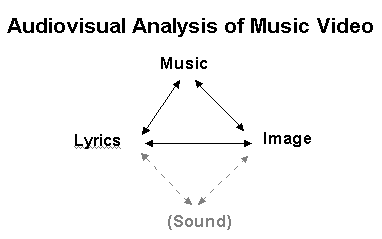
According to Andrew Goodwin, music videos are consisted by mainly three elements, the music, the lyrics, and the visuals…both music and visuals may have illustrating, amplifying, and contradicting relationship with the lyrics.
1. Music
A music video lacking narrative usually base the imagery of the video by the beat and other musical features. Musical elements could take shape of movements in the footage, the camera work, or the editing.
2. Lyrics
Lyrics of the music video usually hints and decide what the music video is going to be about. It interacts creatively with the image to create meaning for the audience to interpret.
3. Visuals
The footages create the key concept and it usually is repeated and varied throughout the video. The rearrangement of the visual motifs is to make the work fluent and seem like a whole.
Expanding on the visuals of MVs, there are a few key features in most MVs
-
Artist shots: Record labels require MVs (some narrative and choreography MV doesn’t) to feature the artist strongly
-
Star Iconography: Many artist have a certain branding, style, or unique selling points in their music video which becomes part of their star image
-
Genre Characteristic: MVs demonstrate certain genre characteristics, e.g. a dance routine for boy/girl band
-
Intertextual Reference: There is often reference to other mediums such as films and TV programs
-
Title: the MV usually has a catchy and creative title at the beginning, end, or throughout it
-
Voyeurism: There’s frequent reference to the notion of looking, and the audience would see things that they do not usually see, for example, nudity
-
Construction: MVs construct a anti-real/hyperreal world for the audience and a certain group of people/icon/trend takes main role in the MV
Who is Involved in Producing Music Videos?
Pre-Production
This is the first phase of the production cycle. Planning for different aspects of production takes place.
-
Planning the story
-
Director – Main responsibility. Involved at every stage of production to help and guide others.
-
Screen Writer – Comes up with a concept that fits the production budget and writes down every detail into a script.
-
Storyboard Artist – Sketches out key frames of the video from the provided script to provide others in the production team a better understanding.
-
Casting (Director) – In small productions casting is done by the Director himself, whereas in bigger productions, there are specially appointed Casting Directors to cast the talents that will be used in the video.
2. Art Department
-
Art Director – Looks after and finalises the visual side of the video.
-
Set Director – Looks after and finalises the build of set and placements of objects in line with the script.
-
Conceptual Artist – Responsible for producing the extraordinary and eye catching elements in the video.
3. Finance
-
Executive Producer – Pays for the entire cost of the video.
-
Producer – Purchases everything needed for the shoot, carefully picking the right brands.
Production
This is the action stage of the production cycle where the video is recorded.
1. Costumes
-
Costume Designer – Considers the storyline and designs different costumes for characters according to their role in the video.
-
Costume Maker – Finishes the designs of the Costume Designer into a final product that is ready to use.
2. Planning the set
-
Location Scout – Locates various settings where the music video can be shot.
-
Set Builders/Set Constructors – Constructs the set from scratch to shoot the video.
-
Prop Master – Supplies the various props that are needed for the construction of the set.
-
Lighting Designer – Looks after the placement of lights for the entire video.
3. Directors
-
Director – Directs the video, considering all aspects of pre-production.
-
Assistant Director – Assists the Director.
-
Production Assistant – Cues in the talents and arranges everyone and everything to be present at the right place and the right time.
4. Camera
-
Director of Photography – Makes the entire video look cool and authentic to the script.
-
Camera Operator – Physically shoots the video.
-
Camera Assistants – Assist the Camera Operator.
5. Sound
-
Production Sound Mixer – Listens to the volume and different sounds on the set to mix and record them as required by the script.
-
Boom Operator – Prepares microphone plots for the crew and records the sound by using specific equipment such as 'boom mics'.
6. Lighting
-
Chief Lighting Technician – Responsible for taking care of all lighting needed on the set.
-
Best Boy/Runner – Manually operates the light when it is needed.
7. Grips
-
Key Grip – Lays down tracks and other equipment firmly in place to facilitate shooting.
-
Best Boy/Runner – Holds the camera or equipment in place when directed.
8. Wardrobe
-
Wardrobe Supervisor – Looks after specific wardrobe needed for the prominent characters in the video.
-
Daily Costume Facilitator – Arrange costumes that would be used by people in background to easily blend in with the set.
9. Props
-
Property Master – Owners of properties that will be used as props in the set.
-
Standby Prop Manager – Arrange standby props for the set.
10. Hair and Make-up
-
Make-up Artist – Applies make-up to people who will be in the video according to their character roles in the script.
-
Hair Stylist – Styles the hair of the lead characters.
-
Prosthetics Artist – Readies the characters with make-up for special effects.
11. Performance
-
Talents – May be Actors/Singers/Dancers or someone else who will perform in front of the camera.
-
Stunt Performers – Act as body doubles for stunts that may be dangerous to perform for the lead talent.
-
Choreographer – Choreographs the entire setting of the set, from entry to exit.
Post-Production
This is the last stage of the production cycle where the final look and feel of the video is shaped.
1. Editing
-
Editor – Sits down with the Director to cut the final video and product trailers for it.
-
Assistant Editor – Helps the Editor with the work.
2. Visual Effects
-
VFX Team – Applies all necessary effects to the video.
Types of Music Videos
Performance
This type of music video is probably the oldest and most commonly used music video. It includes dancing, lip-syncing, and band members playing their various instruments. It can even be a recording of them playing live in some cases. Typically the bands are located in various exciting locations that connect with the song and the feeling and atmosphere they're trying to create. Performance music videos are more uncomplicated to film than other music video kinds, and it's great when a band wants to create a video with a low budget.
Narrative
This type of music video is short film based and involves story telling. It does not have lip syncing. There are three subtypes under narrative.
1. Illustration
Creates a music video where the narrative is based purely on the song. The video will usually include direct references to the lyrics. The scenes are a more or less direct representation of the meaning of the lyrics.
2. Amplification
The director will utilize their creative genes when creating the music video with amplification. Here the lyrics are still closely connected to the music video. It can have complementary scenes not necessarily in the verses but relates to the theme and amplifies the song's meaning.
3. Disjuncture
Disjuncture is when the narrative becomes detached from the song's meaning. Here the director chooses to create a new meaning or theme through the video. It is essentially a narrative video that might not make much sense on the first viewing.
Conceptual
This type of music video deos not have a storyline or relevance to lyrics, but it involves some narrative or performance so audience don’t get lost. There are two subtypes under conceptual.
1. Thematic
Thematic videos are based on a theme. The music video uses a theme based on the genre or the song's meaning. This could be the setting of the music video or a specific color.
2. Symbolic
Symbolic videos are made up of different frames that build meaning with each other. It typically features a lot of fast shots and well-utilized lighting.
Lyrical
This type of music video shows lyrics as song goes along. These videos were extremely popular in the early days of YouTube, they were usually uploaded by a third-party source who didn't have the rights. But slowly, the industry adopted it and started making official lyric videos with theme matching fonts and colors. They have transformed from a modern karaoke-type video to a more creative and innovative one. In some cases, the words can be animated to give more meaning to the music. Outside of that, there's usually a lot of movement in the lyric video, so it's not just static text shown on the screen.
Impressionist:
This type of music video can be used to make the audience/viewer feel a certain way, it focuses on the atmosphere and conveying the moods and emotions aroused by the subject.
Animate
This type of music videos creates everything from a simple 2D animation to stop motion or CGI. Animation music videos typically follow the same structure as other music video types. In some ways, you can see the animated music video as a hybrid.
Surrealist:
This type of music video is outlandish, perplexing, and even uncanny, as it is meant to jolt the viewer out of their comforting assumptions.I
Interpretative:
This type of music video’s lyrics directly reflect what is happening on screen. ... This would happen often in rap, comedy music and some pop videos
Other Types Include:
-Thematic
-Symbolic
-SYNERGY
-CAMEO
-Homage/Parody
-Mixture